
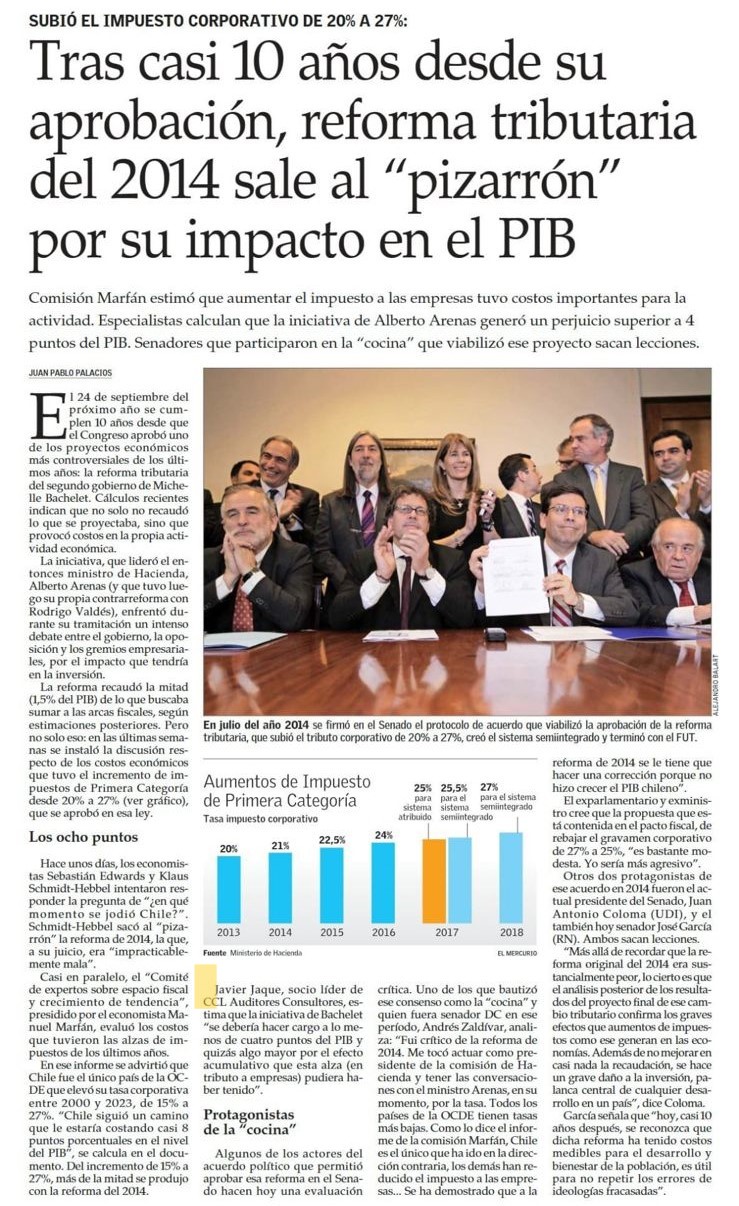
The Marfán Commission estimated that increasing corporate taxes had significant costs for economic activity. Specialists calculate that Alberto Arenas’ initiative caused a loss exceeding 4 percentage points of GDP. Senators who participated in the “backroom negotiations” that made the project viable are now drawing lessons.
Read the full article in El Mercurio.
On September 24 of next year, it will mark 10 years since Congress approved one of the most controversial economic projects of recent years: the tax reform of Michelle Bachelet’s second administration. Recent estimates indicate that it not only failed to collect the projected revenue, but also generated costs for economic activity itself.
The reform collected half (1.5% of GDP) of what it aimed to add to public finances, according to subsequent estimates. But that is not all: in recent weeks, discussion has emerged regarding the economic costs of the increase in First Category tax from 20% to 27% approved under that law.
The eight points
Javier Jaque, Lead Partner at CCL Auditores Consultores, estimates that Bachelet’s initiative “should account for at least four percentage points of GDP, and perhaps even more due to the cumulative effect that this increase (in corporate taxation) may have had.”