
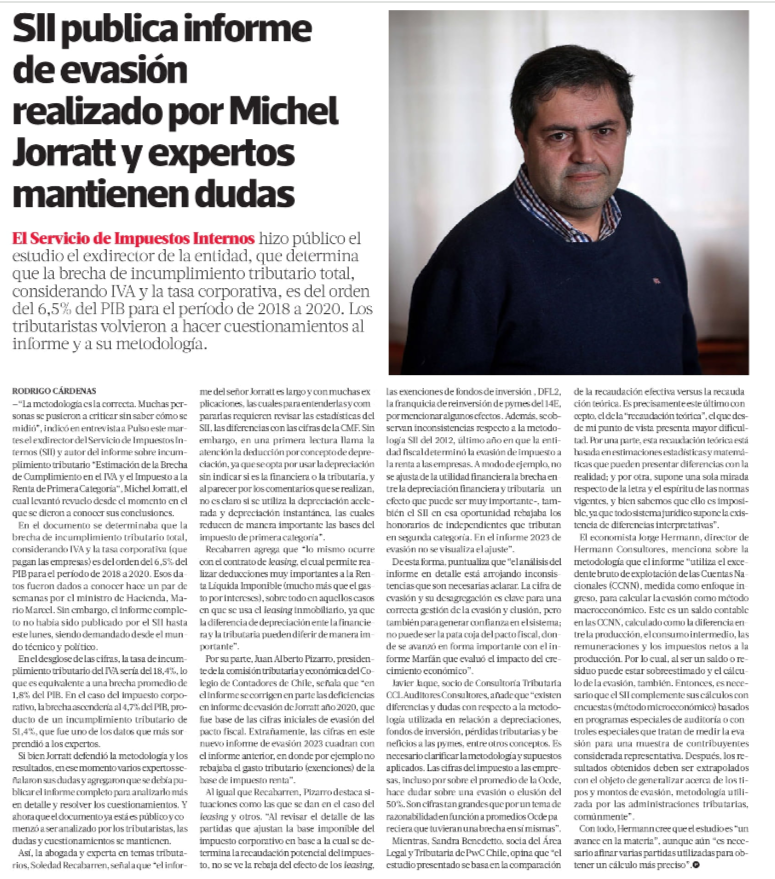
The Internal Revenue Service (SII) made public the study conducted by the entity’s former director, which determines that the total tax compliance gap—considering VAT and the corporate tax rate—is around 6.5% of GDP for the period from 2018 to 2020. Tax experts once again raised questions about the report and its methodology.
Read the full article in La Tercera-Pulso.
The document determined that the total tax compliance gap—considering VAT and the corporate tax rate (paid by companies)—is around 6.5% of GDP for the period from 2018 to 2020. These figures were announced a couple of weeks ago by the Minister of Finance, :contentReference[oaicite:1]{index=1}. However, the full report had not been published by the SII until this Monday, despite being requested by both technical and political sectors.
In the breakdown of the figures, the VAT non-compliance rate would be 18.4%, equivalent to an average gap of 1.8% of GDP. In the case of corporate tax, the gap would rise to 4.7% of GDP, resulting from a tax non-compliance rate of 51.4%, which was one of the figures that most surprised experts.
While Jorratt defended the methodology and the results, several experts at the time expressed doubts and added that the full report should be published to analyze it in greater detail and address the concerns. And now that the document is public and has begun to be analyzed by tax experts, the doubts and criticisms remain.
Javier Jaque, Tax Consulting Partner at CCL Auditores Consultores, adds that “there are differences and doubts regarding the methodology used in relation to depreciation, investment funds, tax losses, and benefits for SMEs, among other concepts. It is necessary to clarify the methodology and assumptions applied. Corporate tax figures—even above the OECD average—raise doubts about a 50% rate of evasion or avoidance. These figures are so large that, from a reasonableness perspective based on OECD averages, they themselves appear to contain a gap.”